
No Dining Table Centerpiece? Stunning Yet Risky Trend
Picture this: you walk into a friend’s dining room, expecting the usual vase of flowers in the middle of the table. Instead, you see… nothing. Just a gorgeous slab of wood, bare and glowing under the light.
That’s the whole idea behind skipping a dining table centerpiece. And weirdly enough, it works.
This trend is popping up in design magazines, Pinterest boards, and real homes everywhere. It’s bold, a little rebellious, and it flips the old “fill every surface” rule on its head.
So is an empty table actually a design upgrade, or just a fancy way of saying “I forgot to decorate”? Let’s dig in.
Thinking about adding texture to your walls? Check out our guide, [Plaster Wall Art: Gorgeous Look or Costly Mistake?], before you make the leap.
What Is the No Dining Table Centerpiece Trend?
At its core, this trend is refreshingly simple. You leave the middle of your table empty, on purpose.
No flowers. No fruit bowl. No candle cluster. Just the table itself, standing on its own two legs (literally).
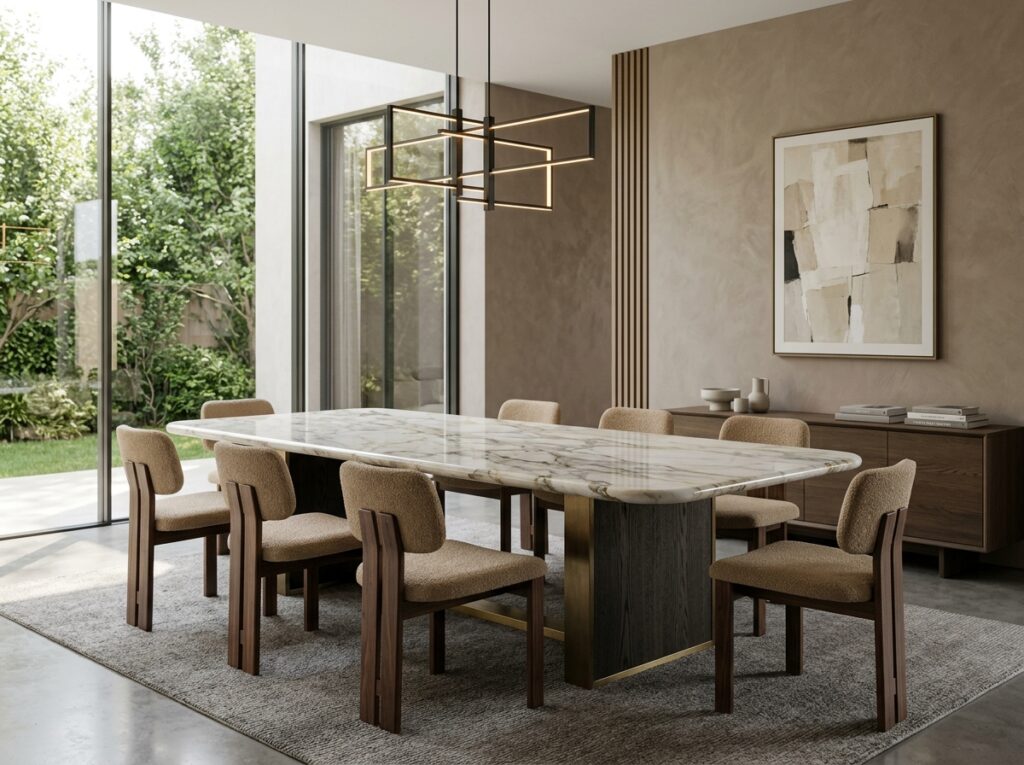
Designers love it because it puts the spotlight on craftsmanship. A beautiful wood grain or a swirl of marble doesn’t need help from a vase to look expensive.
Where Did This Idea Even Come From?
Blame minimalism. Or thank it, depending on how you feel about clutter.
As homes got smaller and lifestyles got busier, people started asking a fair question: does every flat surface really need something sitting on it?
Social media pushed this along too. A table without a dining table centerpiece photographs beautifully, and it fits right into that calm, “everything has its place” aesthetic people can’t stop scrolling through.
Ready to give your space a high-end feel? Discover [7 Home Decor Rules for an Expensive Look] for simple styling tricks that make a big difference.
Why Are People Actually Doing This?
It’s not just about looks. There are some genuinely practical reasons people are dropping the dining table centerpiece altogether.
Here’s what’s pulling people away from the traditional setup:
- Way less dusting and wiping down
- More room for actual food during meals
- The table’s real beauty finally gets noticed
- Setting the table for guests takes seconds
- It fits almost any home style, old or new
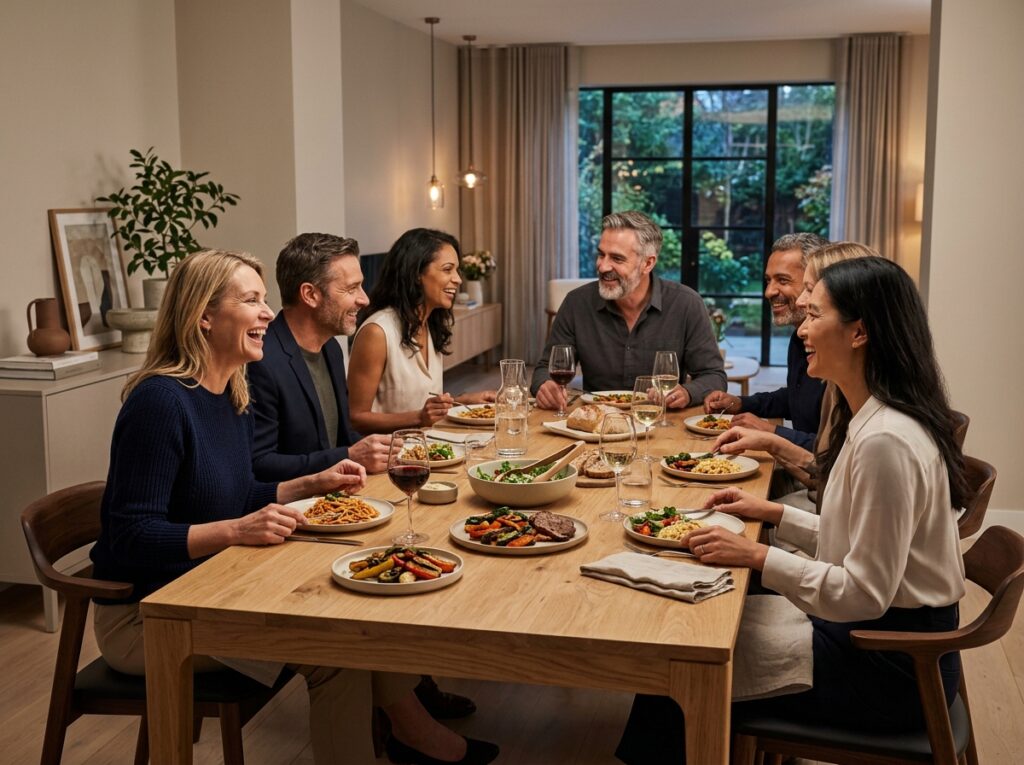
There’s also a social side to it. A tall dining table centerpiece can literally block eye contact across dinner. Clear the space, and suddenly everyone can see each other.
The Upside: Why This Look Works
Let’s be honest, life is busy. Anything that saves five minutes before dinner is worth considering.
Here’s what people love about it:
- Saves time before every single meal
- Creates a calm, open, breathable feel
- Puts good furniture on full display
- Costs absolutely nothing to maintain
- Never wilts, tips over, or needs watering
Plenty of homeowners admit their old dining table centerpiece was barely ever noticed anyway. Getting rid of it feels less like a loss and more like finally exhaling.
The Downside: Where It Can Go Wrong
Of course, not everyone’s convinced. Some people walk into a bare table and just feel like something’s missing.
A few common complaints:
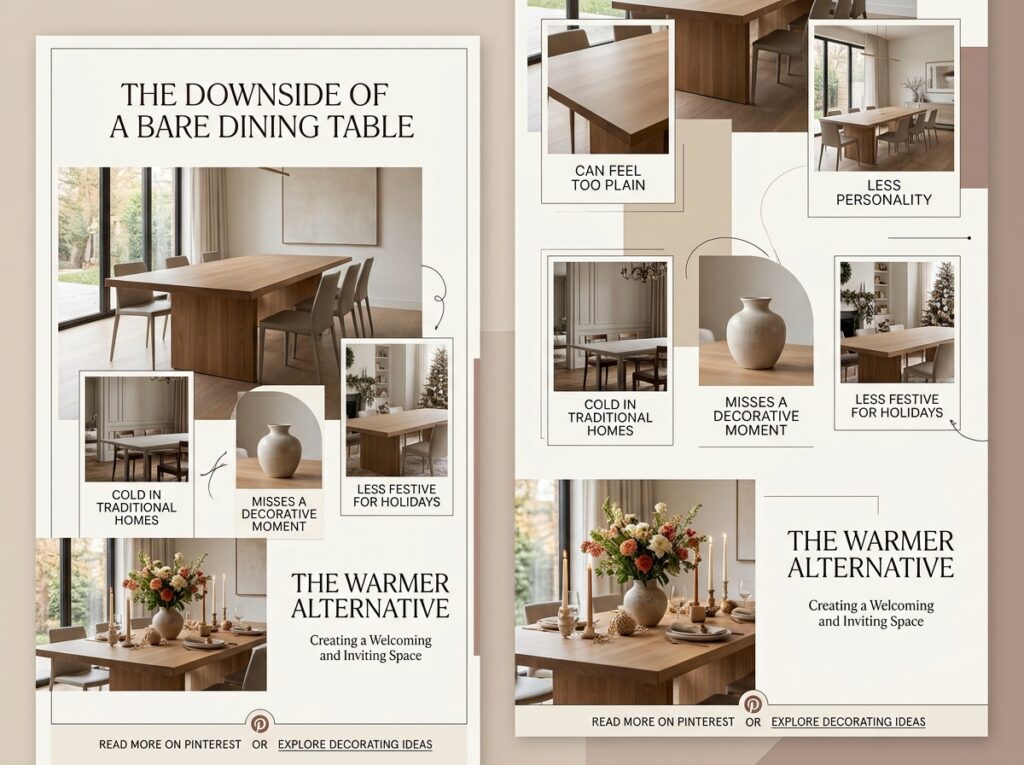
- Can look plain or half-finished
- Loses that personal, decorative touch
- Feels a bit cold in traditional-style homes
- Misses a chance to show off personality
- Can feel less festive during holidays
A seasonal dining table centerpiece, with candles or fresh flowers, often carries a certain warmth. Strip that away, and some rooms can feel a touch too sparse for comfort.
How to Pull Off the Bare-Table Look
If you’re tempted to ditch your dining table centerpiece, a little intention goes a long way. This isn’t about doing nothing; it’s about doing less, on purpose.
Swap a big arrangement for a slim table runner instead. It adds texture without cluttering the surface.
Let the material do the talking. Rich wood grain or veined stone becomes the real showpiece once nothing’s covering it up.
Keep your chairs simple and consistent. When the table is stripped back, mismatched seating suddenly stands out a lot more.
Good lighting helps too. A warm pendant light overhead can add coziness that objects on the table used to provide.
A Quick Real-Life Example
Think about a busy weeknight dinner. You’re rushing between the stove and the table, arms full of plates.
Now imagine there’s no vase to work around, no candles to move, no clutter blocking your serving dish. You just set the food down and eat.
That’s the everyday appeal here. It’s not about a magazine photoshoot; it’s about making regular meals a little less stressful.
Small wins like this add up. Over weeks and months, an empty table quietly saves more time than you’d expect.
Which Table Materials Suit This Style Best?
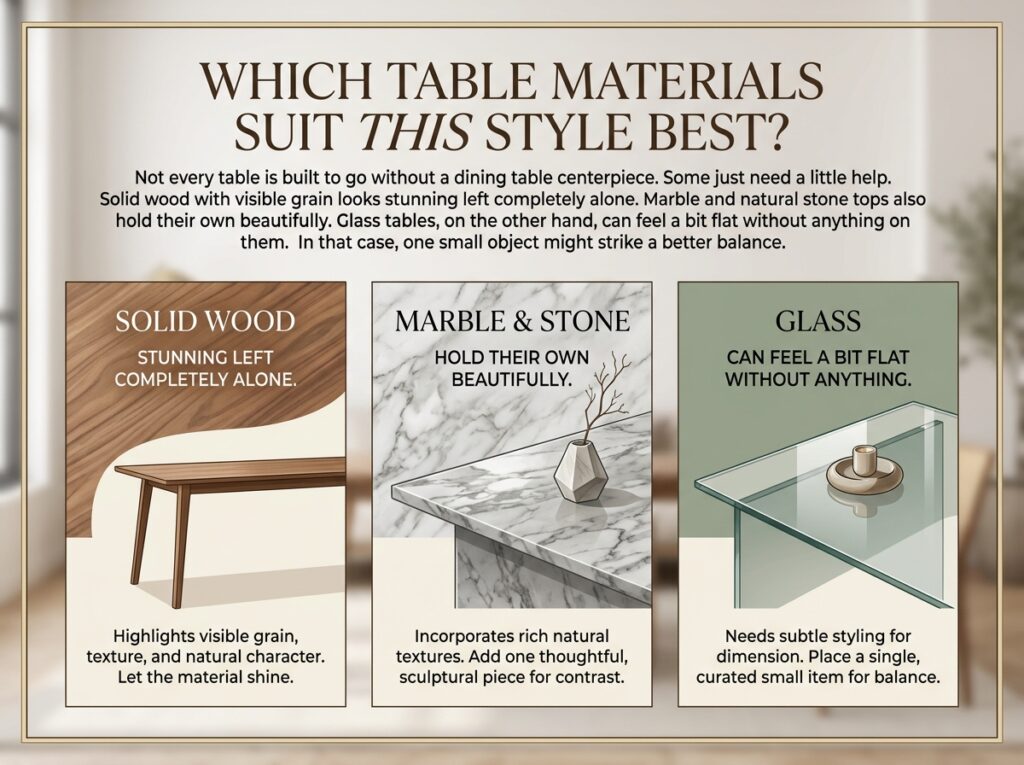
Not every table is built to go without a dining table centerpiece. Some just need a little help.
Solid wood with visible grain looks stunning left completely alone. Marble and natural stone tops also hold their own beautifully.
Glass tables, on the other hand, can feel a bit flat without anything on them. In that case, one small object might strike a better balance.
Mistakes That Ruin the Look
Losing the dining table centerpiece doesn’t mean losing your standards. A few small slip-ups can turn “minimal” into “messy.”
Skip the dusting, and every scratch or smudge suddenly becomes the main attraction.
Ignore lighting, and an empty table can feel gloomy instead of calm and inviting.
Mismatch your chairs, and the lack of decor makes it even more obvious.
Did you know your dining room colors can influence how food looks and feels? Explore [Dining Room Color Ideas That Change Food Flavor] to discover the surprising connection between color and dining.
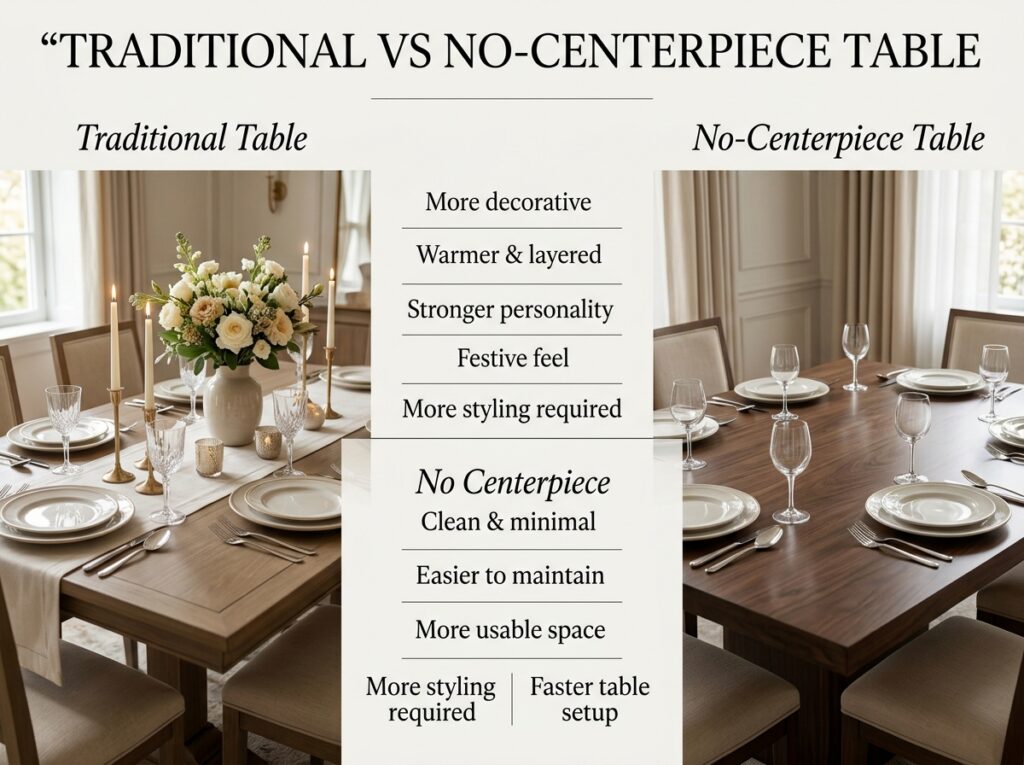
Traditional vs No-Centerpiece Table: A Quick Comparison
| Feature | Traditional Centerpiece | No-Centerpiece Table |
| Visual focus | Flowers or decor items | Table material and texture |
| Cleaning effort | Frequent upkeep needed | Quick wipe-down, done |
| Personal touch | Easy to change and express | Subtle, more understated |
| Best suited for | Formal, traditional homes | Modern, minimal homes |
| Ongoing cost | Fresh flowers, replacements | Basically nothing |
| First impression | Warm and decorated | Clean and spacious |
So, Is This Trend Right for Your Home?
If you’re drawn to calm, modern, uncluttered spaces, this style will probably feel like a relief.
If you love hosting formal dinners or seasonal gatherings, keeping a small, low dining table centerpiece might still suit you better.
A good middle ground? Try going bare for a week. Clear everything off and just see how the room feels to live in.
Missing it after a few days is completely fine too. Add one small item back, nothing says you have to commit forever.
At the end of the day, a loaded-up table isn’t the only way to look put-together. Sometimes an empty one says just as much.
Final Thoughts
Skipping the dining table centerpiece isn’t really about having less stuff. It’s about being more intentional with what actually earns a spot on your table.
Whether you go fully bare or keep a single simple touch, the goal stays the same: let the table, and the people around it, take center stage.
FAQs About Going Without a Centerpiece
Is it OK to leave a dining table completely bare? Yes, absolutely. Many designers now encourage skipping the dining table centerpiece, especially when the table itself is made from a beautiful material.
Does skipping the centerpiece make a room look unfinished? Not necessarily. A clean, empty surface often reads as intentional and spacious rather than incomplete.
What can I use if I don’t want it fully empty? A slim runner, one small candle, or a single decorative object works well without crowding the space.
Is this style good for small dining rooms? Definitely. An open table makes small rooms feel noticeably bigger and easier to move around in.
Will this look go out of style soon? Minimalist design has stuck around for years, so this trend has real staying power. A clean table rarely feels dated.