
7 Home Decor Rules for an Expensive Look
Walking into an empty room can feel both exciting and deeply overwhelming. You see beautiful rooms on social media or in design magazines all the time.
However, trying to recreate that look in your own home often feels impossible. It can feel like solving a difficult puzzle with missing pieces.
The secret that professional interior designers rely on isn’t a massive budget. It is also not a natural-born gift that you either have or you don’t.
Instead, great design relies on a simple set of foundational guidelines. By mastering a few basic rules of home decor, you can eliminate all guesswork.
You will save money on pieces that do not fit your lifestyle or room. You will confidently design a space that feels completely comfortable and cohesive.
As someone who has spent years studying layouts and testing various color palettes, I want to share what truly works. A beautiful home always comes down to a few core principles.
Looking for more inspiration? Explore our complete guide on how to style a living room with designer-approved ideas to create a cozy, elegant, and functional space.
Whether you are decorating your first apartment or refreshing your current house, these rules will help. These seven practical styling principles will transform your space from messy to beautiful.
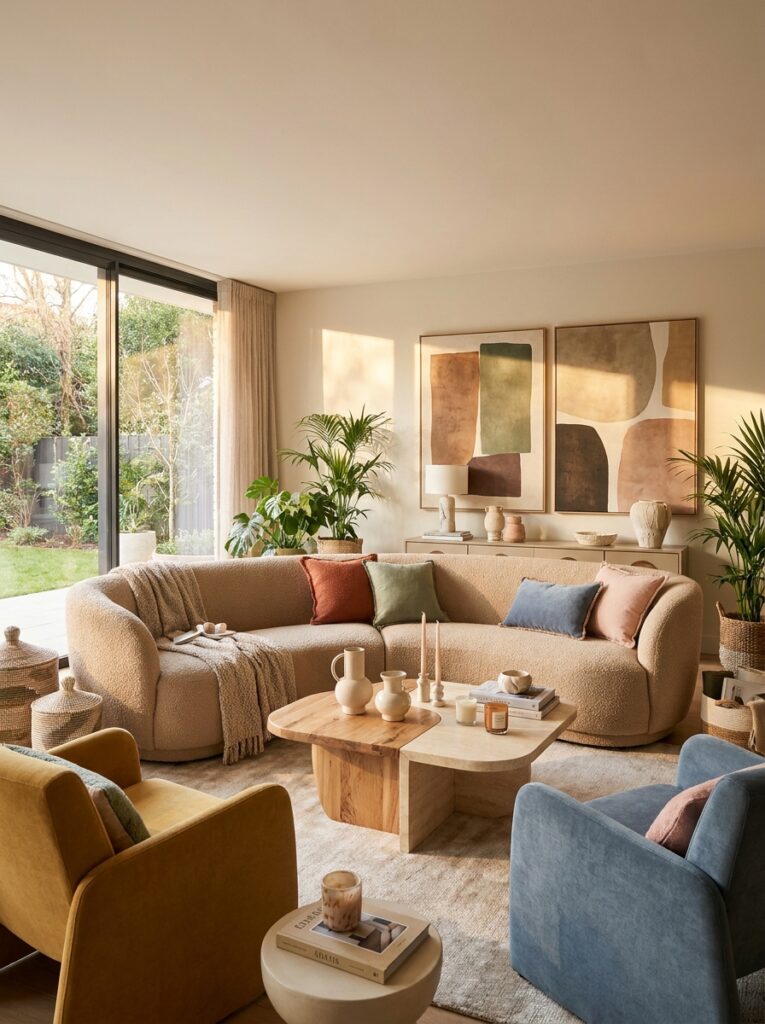
1. The 60-30-10 Color Rule
One of the most common mistakes beginners make is using too many colors at once. This instantly makes a room feel crowded, chaotic, and disorganized.
To keep things balanced, professionals always use the classic 60-30-10 rule. This formula creates a perfect map for choosing a color palette smoothly.
Color Palette Distribution:
████████████████████████ 60% Main Background Color
████████████ 30% Secondary Supporting Color
████ 10% Accent Pop of Color
The Dominant Foundation (60%)
This is the background color of your room that sets the main mood. It usually goes on your walls, large rugs, or largest furniture.
For a relaxing space, people often choose soft neutrals like cream or light gray. This large canvas gives the eyes a quiet place to rest easily.
The Supporting Secondary Color (30%)
This second color adds visual depth and prevents the room from looking boring. It should look distinct but complement your main background color beautifully.
Use this shade for your curtains, accent chairs, or bedroom linens. It creates a nice layer of contrast without overwhelming the human eye.
The Accent Pop (10%)
This final slice is your fun pop of personal style and bright character. Use it in very small doses throughout the designated room layout.
Great examples include throw pillows, vibrant artwork, or unique metallic lamp bases. It provides the perfect finishing touch to bind the room together.
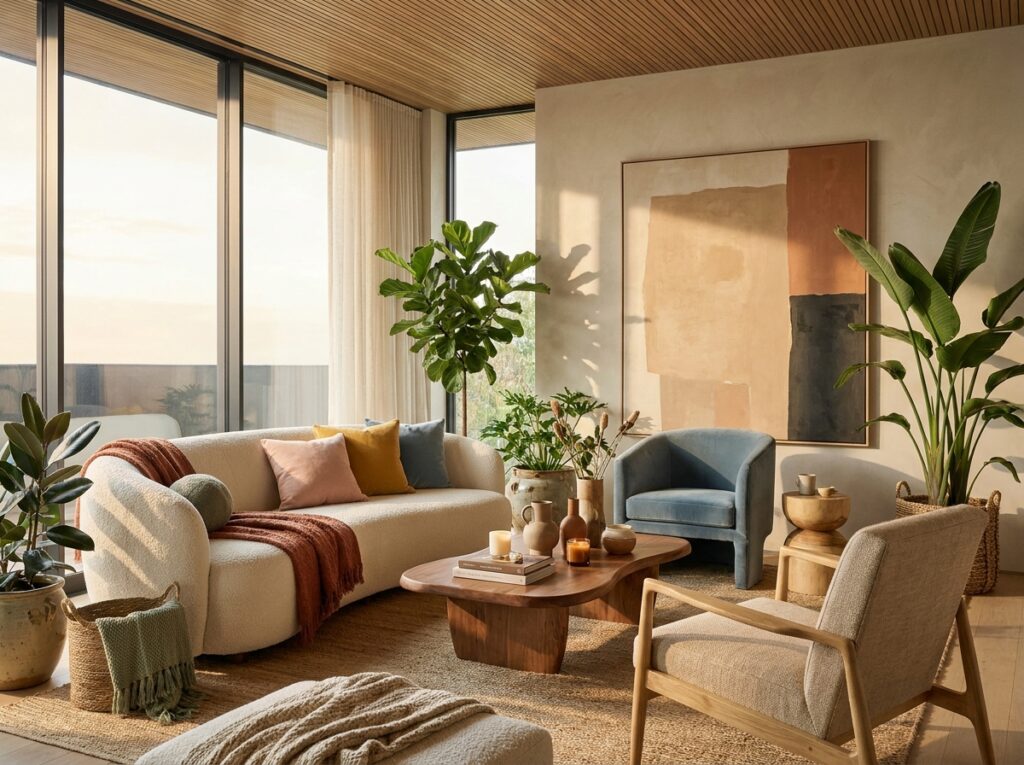
2. Pick the Right Rug Size
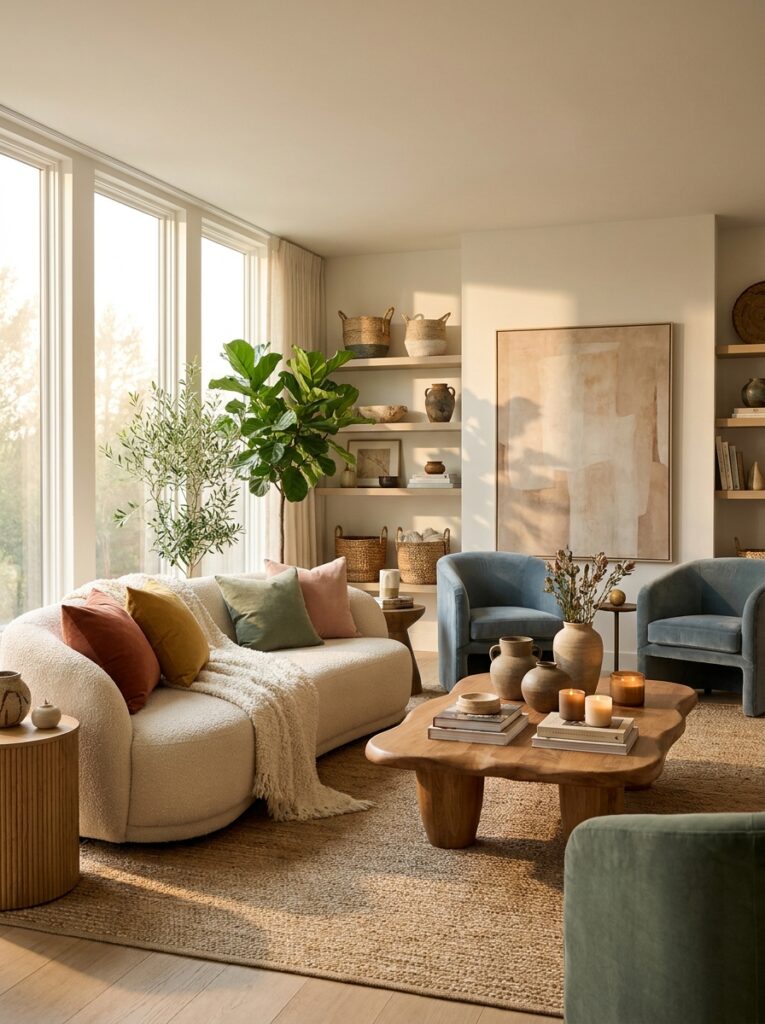
An empty space between your furniture can make a room look completely unfinished. Think of an area rug as an invisible boundary line for a zone.
A rug that is too small looks like a tiny floating island. It makes all your large, expensive furniture look awkward and disconnected.
When planning your living room layouts, use the “front legs on” rule. At the very least, the front feet of your sofa must sit on the rug.
For a dining room, the rug needs to be even larger for safety. All four legs of the chairs must stay on it when pulled out.
Real-World Expert Tip: If you fall in love with a beautiful rug that is too small for your budget, do not worry! You can layer it.
Buy a larger, cheap jute or seagrass rug to use as a big base. Then, place your smaller, pretty rug right on top of the center.
3. Hang Your Curtains High and Wide
If you want to make a standard room feel luxurious, look at your windows. Most beginners hang a curtain rod right on top of the window frame.
They also buy short curtains that just cover the glass itself. This cuts the wall in half and makes your entire room look much smaller.
Instead, hang your curtain rod 4 to 6 inches above the window frame. You can even hang it all the way up near your ceiling.
Also, make the rod wider than the window frame on both sides. Extend it outward by roughly 3 to 6 inches past the casing.
When you open the curtains, the fabric will sit safely on the wall. It will not block the beautiful, natural window light from coming inside.
This optical illusion tricks the brain into thinking your windows are huge. It also makes your ceilings look much higher than they really are.
Want to refresh your outdoor space? Explore our favorite garden design ideas to create a beautiful, relaxing garden that enhances your home’s curb appeal.
4. Balance the Size of Your Furniture
In the design world, we talk a lot about scale and proportion. This simply means how items look when placed directly next to each other.
It also refers to how well they fit inside a specific room. A giant, bulky leather sofa stuffed inside a tiny apartment feels very suffocating.
On the other hand, a tiny coffee table next to a massive sectional looks lost. It destroys the visual balance of your seating area.
Before buying any new furniture, always measure your space carefully. Never try to guess the dimensions inside a bright furniture showroom.
A great trick is to use blue painter’s tape on your floor. This lets you see exactly how much space a piece takes up.
Try to mix different shapes and visual weights across the layout. If you have a heavy sofa, pair it with a light coffee table.
Look for a table that has thin, open metal legs instead of wood. This keeps the room from feeling too heavy at the bottom.
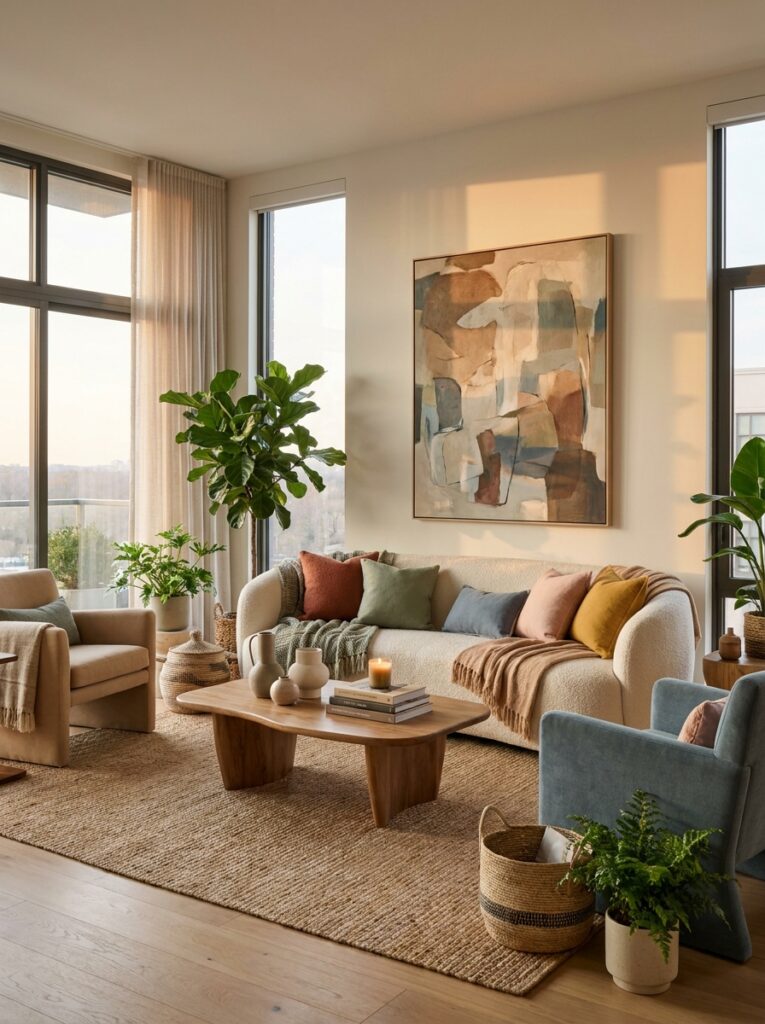
5. Use Three Layers of Light
Relying entirely on a single overhead light bulb creates harsh shadows. It makes a room feel cold, sterile, and uninviting to guests.
To master home styling for beginners, you must mix your light sources. Every cozy room requires three distinct layers of light to work.
Layer 1: Ambient Light
This is your general overhead ceiling light that brightens the whole room. It allows you to walk around safely and see things clearly.
Layer 2: Task Light
This is light meant for specific jobs and focused daily activities. Examples include a reading lamp or bright lights over a kitchen counter.
Layer 3: Mood Light
These are soft, warm lights that make a room feel incredibly cozy. Think of small table lamps, glowing candles, or dimmable wall sconces.
By spreading these light sources out, you gain total control. You can change the mood of your living space instantly at night.
6. The Magic of Odd Numbers
When decorating a shelf or a coffee table, avoid even numbers. Organizing items in pairs can make your home look like a rigid store.
The human brain naturally enjoys looking at odd numbers of items. They look much more relaxed, organic, and interesting to our eyes.
The simplest way to use this concept is the classic home decor Rules of Threes. When putting items together on a surface, group three objects together.
Make sure they feature different heights, shapes, and unique textures. This variation keeps the arrangement from looking flat or boring to visitors.
For example, pair a tall glass vase with a stack of two flat books. Then, place a small round candle right on top of those books.
This creates a beautiful, natural look that feels styled but not forced. It draws the eye in without creating a mess on your tabletop.
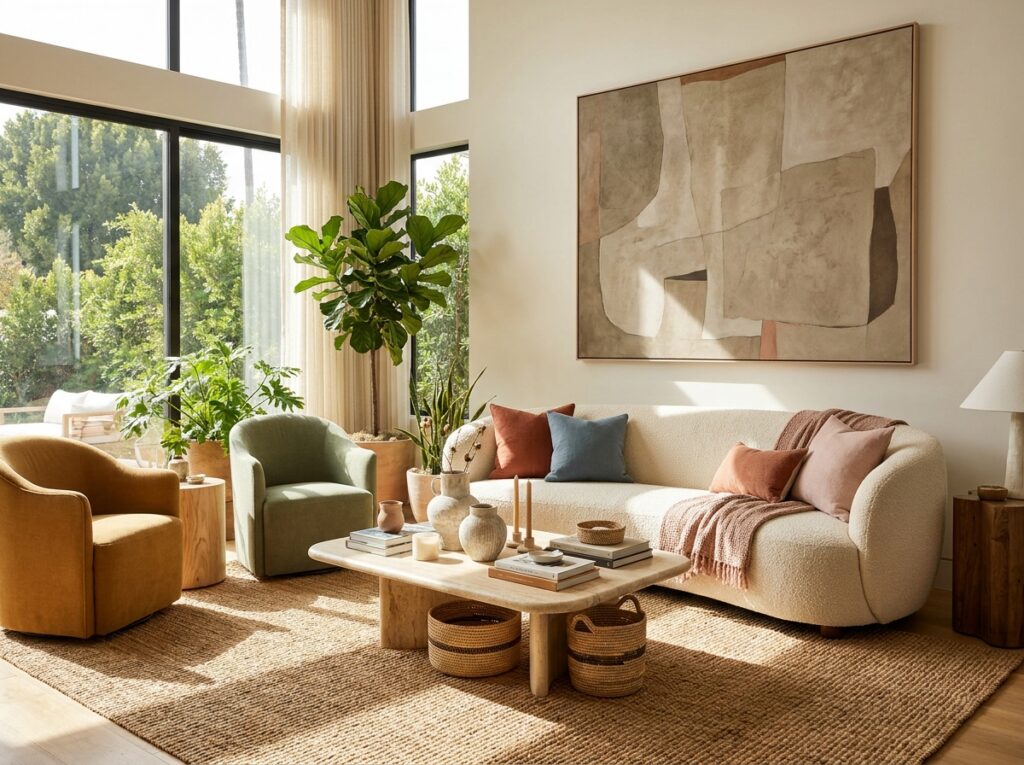
7. Leave Some Empty Space
When you start loving home decor, it is easy to overfill your home. You want to display every single travel souvenir and photo frame.
However, a room with no empty space quickly looks cluttered. It causes mental stress and makes the entire home feel smaller.
Designers call these intentional empty areas “negative space” in a layout. It is just as important as the furniture you actually buy.
Leave a few shelves completely empty to create breathing room. Keep a couple of walls clean without hanging any pictures at all.
Pull your furniture a few inches away from your cold walls. Pushing everything flat against the drywall makes a room feel tight.
Letting your items breathe is what makes a home look truly expensive. It creates a peaceful, clean environment that feels wonderful to live in.
Master Every Home Decor Rules for a Beautiful Home
Using the basic home decor rules does not mean being rigid. Your house does not have to look like a cold, empty showroom.
These guidelines are just helpful guardrails to keep you on track. Pair them with the right dining room color ideas to create a space that feels balanced, functional, and deeply comfortable.
The most beautiful homes always mix these rules with personal stories. They highlight your favorite travel memories, unique colors, and everyday comfort.
Pick just one room this upcoming weekend to refresh yourself. Focus on changing one small thing, like your curtain height or table decor.
Watch how quickly your living space transforms into a designer sanctuary. You have all the tools you need to design a home you love.
Frequently Asked Questions
How do I choose the best color palette for a dark room?
Stick to the 60-30-10 rule using light, warm neutrals for the 60%. Use mirrors to bounce light around and brighten up the dark corners.
How can I make my living room look put together?
Use the home decor Rules of Threes for tables and pull furniture away from walls. Switch off the bright overhead lights and use warm table lamps instead.
How do I start decorating a room from scratch?
Clean out the space completely and choose your main furniture piece first. Once that is placed, add your rug, colors, and small decor items.
What are the basic rules of home decor?
The most important rules are balancing your furniture sizes and using color formulas. You should also hang curtains correctly and buy large area rugs.
[…] you pick the right colors for your appetite, learn how to style the rest of your space with these [7 Home Decor Rules for an Expensive Look] without breaking the […]
[…] complement a distraction-free setup, learn the essential [home decor rules that make any room look premium] without breaking the […]
[…] Before trying bold optical illusion techniques, make sure you’ve mastered the fundamentals with our guide on the 7 Essential Home Decor Rules for a balanced and beautiful space. […]
[…] Instead, push the television slightly to one side of your console table to create an asymmetrical layout. This leaves an open surface on the other side for beautiful, high-impact decor while following these essential home decor rules for a balanced and stylish living room. […]