
Layering Trick: Stunning Upgrade or Overdone Mess?
Ever walked into a room that just felt… put together? Not fancy, not expensive-looking, just right. Chances are, someone used the layering trick.
It’s the quiet secret behind rooms that look designed instead of decorated. No big renovation, no huge budget, just smart placement of what you already own.
But like any good trick, it can backfire. Do it wrong, and your cozy room turns into a cluttered mess overnight.
So let’s break down exactly what this layering trick is, why it works so well, and how to actually pull it off at home.
What Is the Layering Trick?
Curious about the no-centerpiece trend? See why this minimalist dining look is stunning—but surprisingly risky.
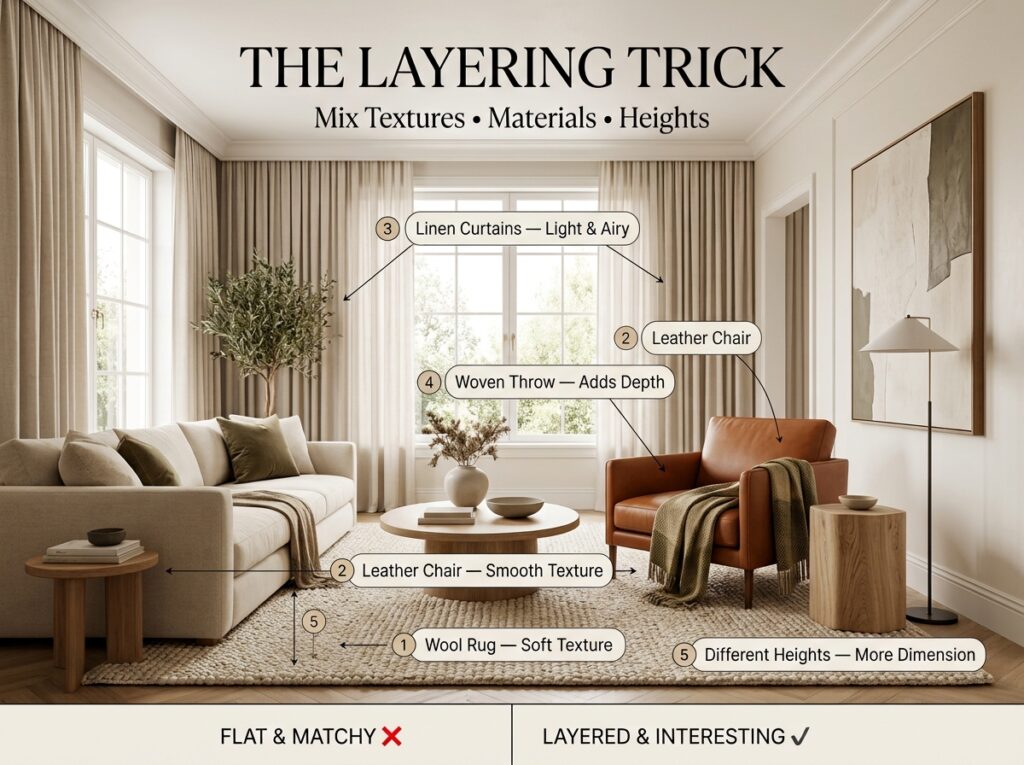
At its simplest, the layering trick means combining different textures, heights, and materials in one space instead of matching everything perfectly.
Think a wool rug under a leather chair, next to a linen curtain, topped with a woven throw. Nothing matches exactly, yet it all feels connected.
Designers use this approach because flat, single-texture rooms often feel a little lifeless. Layers add depth the eye naturally enjoys.
Why Designers Swear By This Layering Trick
Professional designers don’t just add furniture and call it done. They build rooms in layers, almost like painting.
This approach works because our brains respond to variety. A room with only smooth, matching surfaces can feel flat and forgettable.
Add a rough jute rug, a soft velvet cushion, and a shiny brass lamp together, and suddenly the space feels rich and intentional.
There’s also a practical side. Layering hides small imperfections, since the eye is busy noticing texture instead of flaws.
How the Layering Trick Actually Works
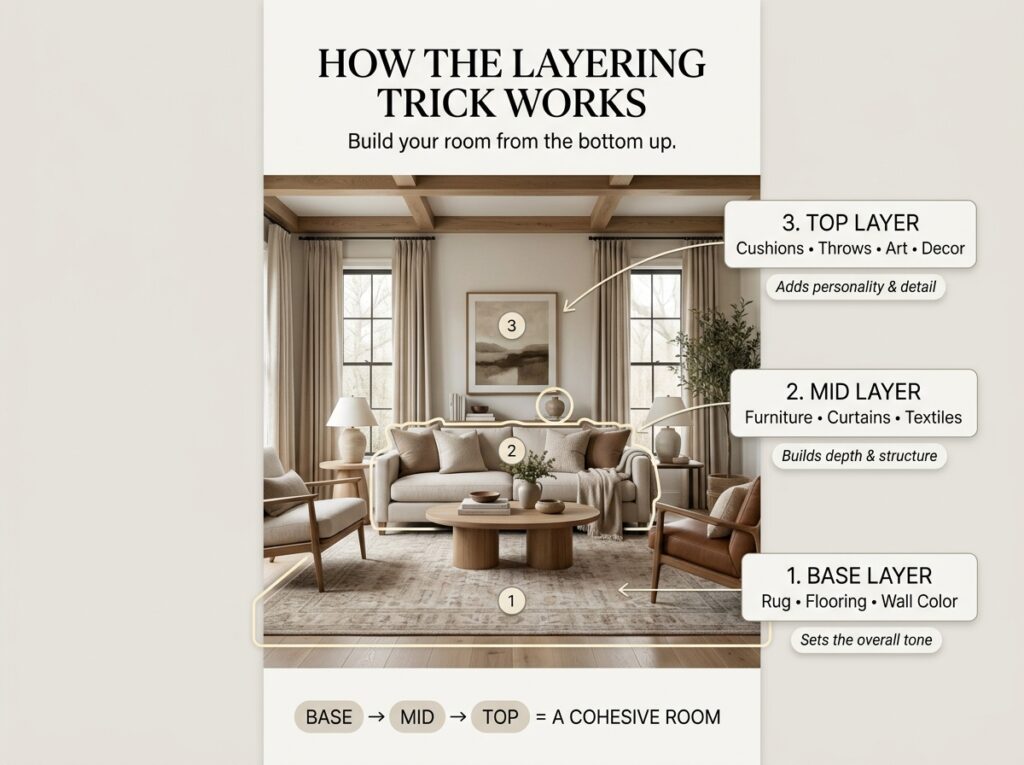
The idea sounds simple, but there’s a method behind it. Good layering follows a rough order.
Start with your base layer. This is usually the rug, flooring, or wall color that sets the overall tone.
Add your mid layer next. Furniture, curtains, and larger textiles go here, building on top of that base.
Finish with the top layer. Cushions, throws, art, and small objects bring in personality and finishing detail.
Following this simple order helps avoid a messy, thrown-together look.
The Good Side: Why This Trick Works So Well
There’s a reason this technique shows up in almost every professionally designed room.
Here’s what makes it so effective:
- Adds visual depth without buying new furniture
- Makes a plain room instantly feel cozier
- Works with almost any budget or style
- Hides small flaws in walls or floors
- Easy to update by swapping just one layer
Because of all this, layering has become a favorite shortcut for renters and homeowners alike.
Love textured walls? See if plaster wall art is worth the hype.
The Risky Side: Where It Can Go Wrong
Like most good things, this trick has limits. Overdo it, and the results flip fast.
Watch out for these common issues:
- Too many patterns can feel chaotic
- Clashing colors instead of complementary ones
- Overcrowded surfaces that feel cluttered
- Mixing textures with no clear connection
- Losing the room’s main focal point
This technique only works when there’s still a sense of order underneath all the texture. Without that, it just looks messy.
Using the Layering Trick in Different Rooms
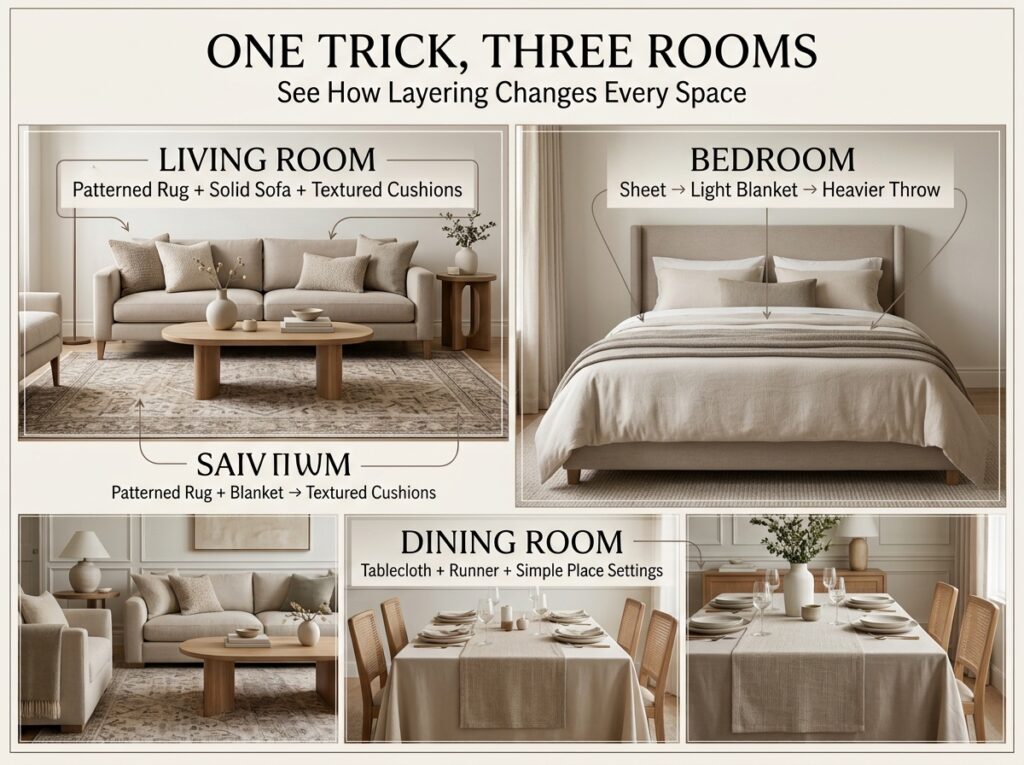
This technique isn’t just for living rooms. It adapts well across the whole home.
In the living room, try a patterned rug, a solid sofa, and textured cushions on top. Keep one element calm so the eye has somewhere to rest.
In the bedroom, layer your bedding first. A fitted sheet, a light blanket, then a heavier throw folded at the end creates instant hotel-style comfort.
In the dining room, layer a table runner over a solid tablecloth, then add simple place settings. It looks intentional without trying too hard.
A Quick Real-Life Example
Picture two identical rented apartments, same white walls, same plain sofa, same basic layout.
In one, the owner adds a textured rug, a knit throw, and a couple of patterned cushions. Nothing else changes.
That single shift, powered by the layering trick, is often the entire difference between a room that feels temporary and one that feels like home.
It costs very little, takes an afternoon, and needs zero permission from a landlord. That’s exactly why it’s spread so fast online.
Choosing Colors and Patterns That Actually Work Together
Texture is only half the story. Color and pattern choices decide whether this approach feels curated or chaotic.
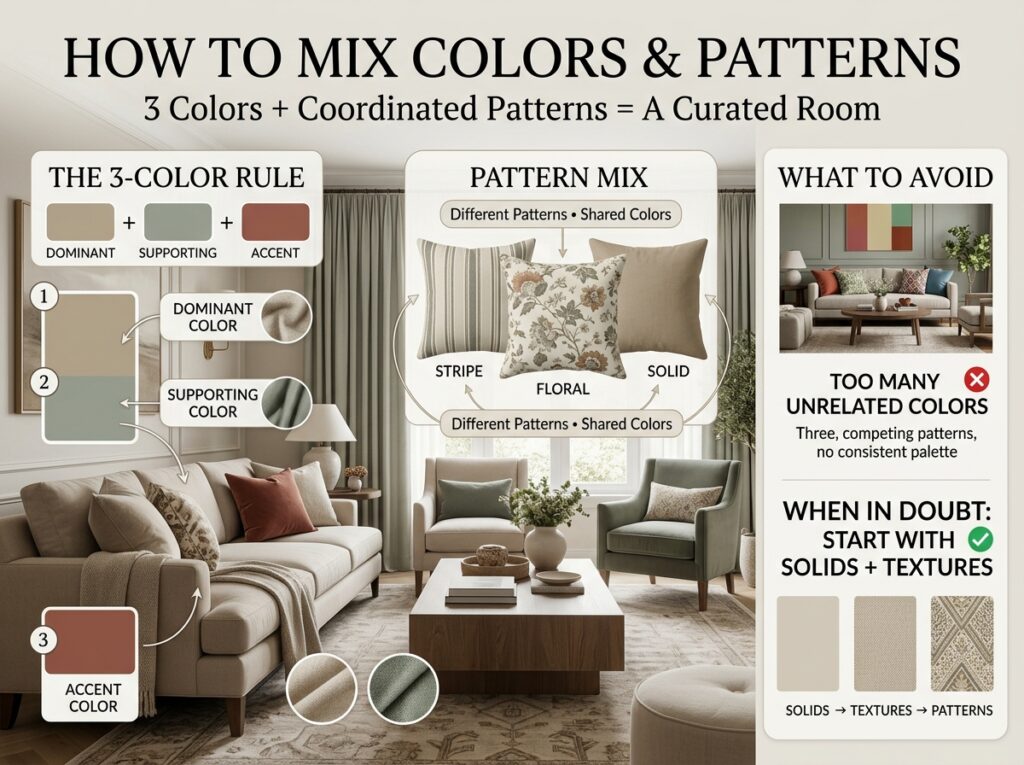
A safe starting point is picking one dominant color, one supporting color, and one accent. Keep patterns within that same palette.
Mixing a stripe, a floral, and a solid works well when they all share a similar color tone. Mixing three unrelated colors rarely does.
If you’re unsure, start with solids and textures only. Add pattern later, once the base layers already feel balanced.
Where to Splurge and Where to Save
Not every layer needs a big budget. Knowing where to spend makes this trend far more affordable.
A statement rug or a quality throw blanket is worth the investment, since they touch the room the most.
Smaller items like cushion covers, table runners, or a vase can easily come from budget stores without hurting the overall look.
This mix of splurge and save keeps the layering trick realistic for almost any household, not just design-magazine budgets.
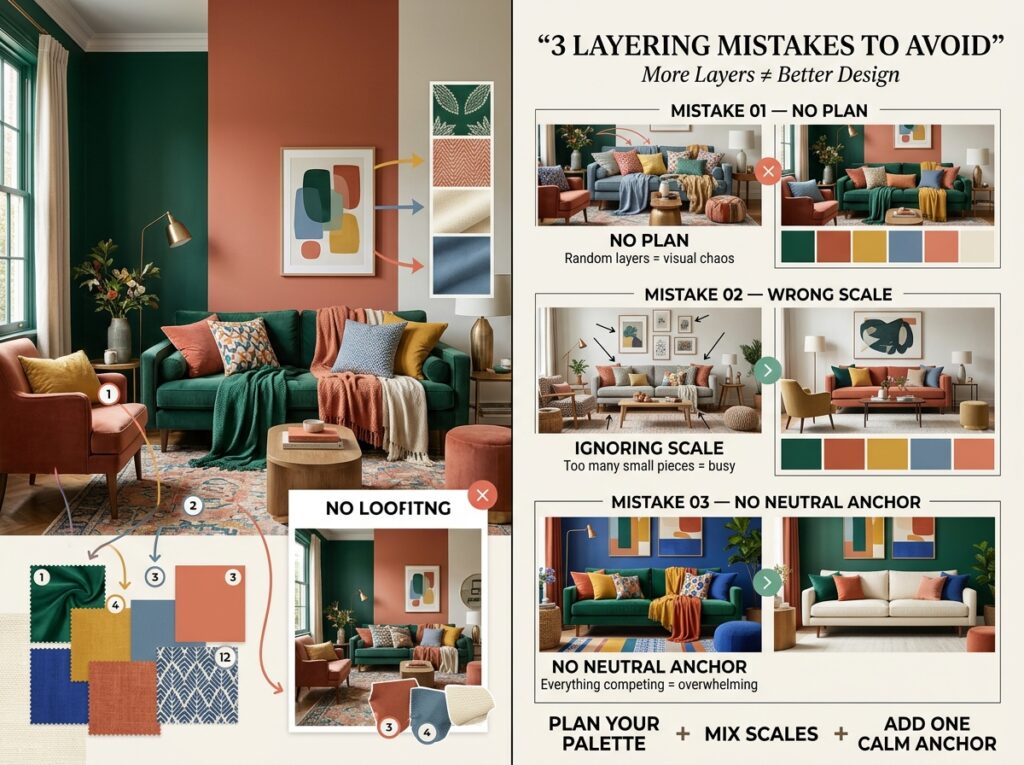
Common Mistakes to Avoid With This Trend
Even a good idea can go wrong with the wrong execution. A few mistakes come up again and again.
Skipping a plan is the biggest one. Random layers thrown together rarely look cohesive.
Ignoring scale is another issue. Mixing only tiny items makes a room feel busy instead of balanced.
Forgetting a neutral anchor causes problems too. Without one calm element, the whole room competes for attention.
No Layering vs Layering Trick: Quick Comparison
| Feature | Flat, No-Layer Room | Room Using the Layering Trick |
| Visual depth | Minimal | Rich and dimensional |
| Cozy feeling | Often feels plain | Warm and inviting |
| Cost to achieve | Usually needs new items | Uses what you already own |
| Risk level | Safe but forgettable | Stylish but easy to overdo |
| Best for | Simple, clean spaces | Personality-driven spaces |
Is the Layering Trick Right for Your Home?
If your rooms feel a little flat or unfinished, this technique is worth trying before buying anything new.
If you already love bold patterns and lots of texture, go slowly. You may only need one or two extra layers, not five.
A simple test helps here. Add one layer at a time and pause. Stop once the room feels balanced, not before.
Final Thoughts
The layering trick proves that a designer look doesn’t require a designer budget. It just takes a bit of intention.
Start small, trust your eye, and remember that even professionals stop layering once a room feels right, not perfect.
From basic to beautiful—see how a coffee station can transform your space.
FAQs About the Layering Trick
What exactly is the layering trick in interior design? It’s the practice of combining different textures, materials, and heights in one space to add depth and warmth.
Can this trick work in a small room? Yes. Smaller rooms often benefit even more, since layers add coziness without needing extra floor space.
How many layers are too many? There’s no fixed number, but if the room feels busy or hard to relax in, it’s time to remove a layer.
Do I need new furniture to try this? Not usually. Most homes already have enough textures and textiles to start layering right away.
Is this trend expensive to achieve? No. One of its biggest advantages is that it works with items you likely already own.